
Writing
没有 (méi yǒu) — how to say "not have" in Chinese
没有
Not have, there is not
verb · negation adverb
How to use it
How is 没有 used with nouns and verbs?
没有 has two useful patterns. Before a noun it means not having: 我没有钱 means I don't have money. Before a verb it says the event did not happen: 我没有去 means I didn't go. The same 没有 covers both, and 没 alone is a common shorter form.
我没有钱
wǒ méi yǒu qián
I don't have money.
我没有去。
wǒ méi yǒu qù 。
I didn't go.
Character composition
没
not have; no
有
to have
Radicals / Keys
月
Moon
#74 · yuè · 4 strokes
水
Water
#85 · shuǐ · 4 strokes
Collocations
没有钱
méiyǒu qián
have no money
没有时间
méiyǒu shíjiān
have no time
Examples
我没有钱,我不买东西。
I don't have money, I don't buy anything.
Mnemonic
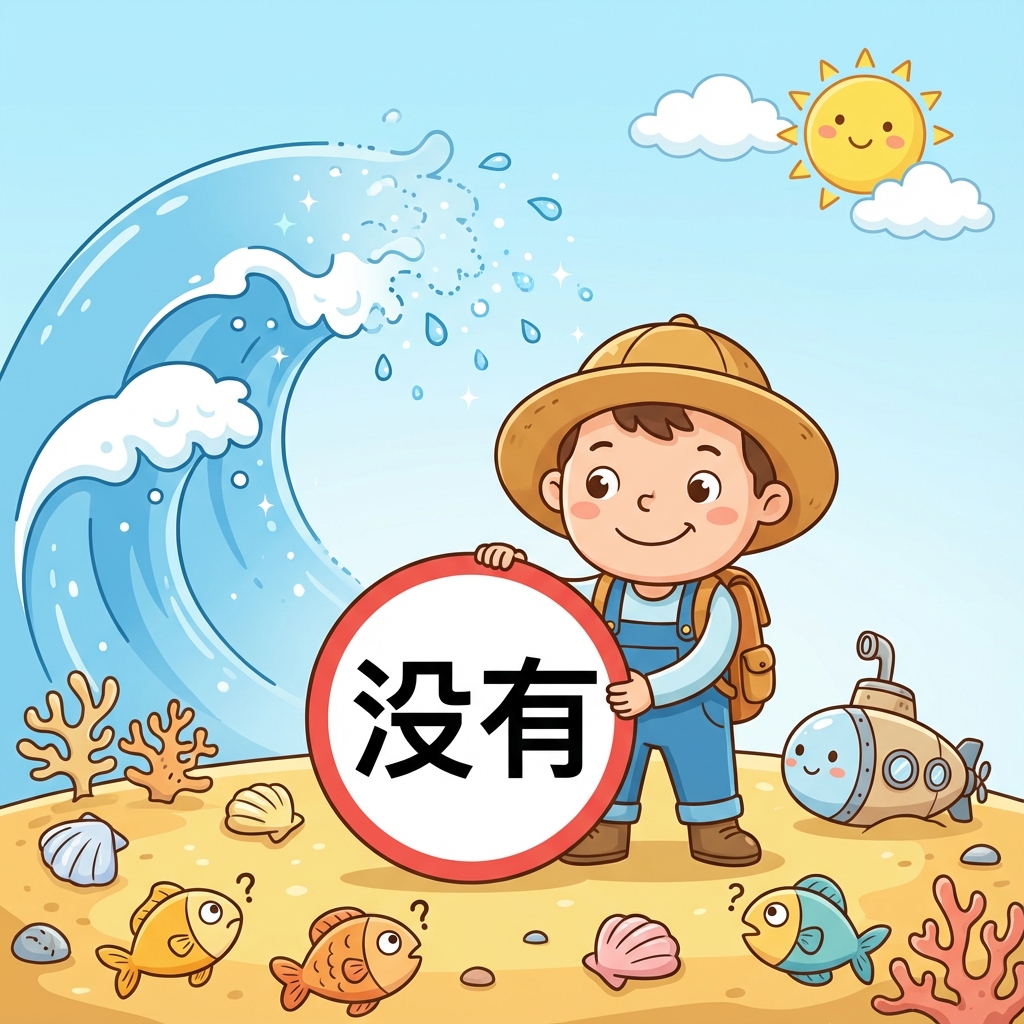
[méi yǒu-] May-Yo, the famous ocean explorer, is standing before a giant wave with a sign that reads 没有 "NO" 🌊. The sign says: "没有 WAVE IN THE FUTURE!" Suddenly, the water vanishes and May-Yo smiles as the sea becomes completely empty.
Frequently asked questions
How do you say "not have" in Chinese?
"not have" in Chinese is 没有 (méi yǒu).
没有 meaning in English
没有 (méi yǒu) means "Not have, there is not".
How is 没有 pronounced?
It is pronounced méi yǒu (written as mei you, meiyou). You can listen to the pronunciation on this page.
How do you write "not have" in Chinese characters?
It is written 没有: 没 has 7 strokes, 有 has 6 strokes. The Writing section above animates the stroke order of each character and lets you trace it.
What HSK level is 没有?
没有 belongs to the HSK 1 vocabulary list.
Tomyo
Learn Chinese words with spaced repetition
Add 没有 to your vocabulary and remember it with smart reviews, audio and examples.