
零
líng
0 — zero
The numbers 0 to 10 with audio, the rules that turn them into any number, and when 两 replaces 二. Further down: the everyday topics built on numbers — dates, time, money and phone numbers.
Type a number to see how it is written in characters and how it sounds.
These characters are enough to say any number up to a hundred million. The button on a card plays the sound; the card itself opens the word page with examples and stroke order.
A Chinese number reads like an abacus: a digit, then its place. 三十五 is "three tens five", 二百四十 is "two hundreds four tens".
Grammar rule: Numbers up to 9999
shí yī
11
shí wǔ
15
èr shí
20
èr shí yī
21
sān shí wǔ
35
jiǔ shí jiǔ
99
yì bǎi
100
yì bǎi yī shí
110
sān bǎi líng wǔ
305
yì qiān èr bǎi
1,200
yí wàn
10,000
shí wàn
100,000
Chinese has two words for "two", and they are not interchangeable.
Grammar rule: The measure word 个
liǎng ge rén
Two people
liǎng běn shū
Two books
liǎng qiān
2,000
liǎng wàn
20,000
èr shí èr
22
dì èr
Second
yì bǎi líng wǔ
105
yì qiān líng wǔ
1,005
yì qiān wǔ bǎi
1,500
yí wàn líng wǔ shí
10,050
In China every number from one to ten is shown on one hand. It is how prices are shown at a market or numbers across a noisy room.

The index finger.

The index and middle fingers.

The middle, ring and little fingers; the thumb holds down the index finger.
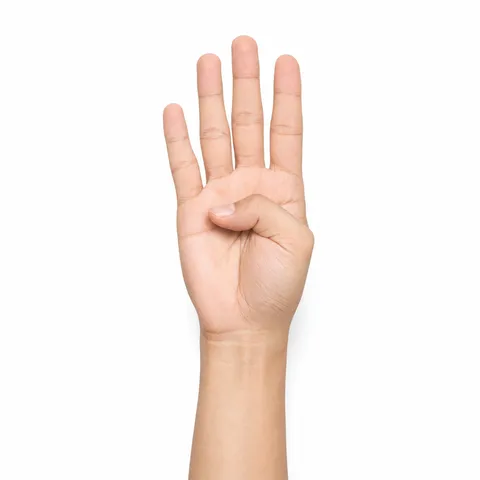
Four fingers, the thumb folded in.
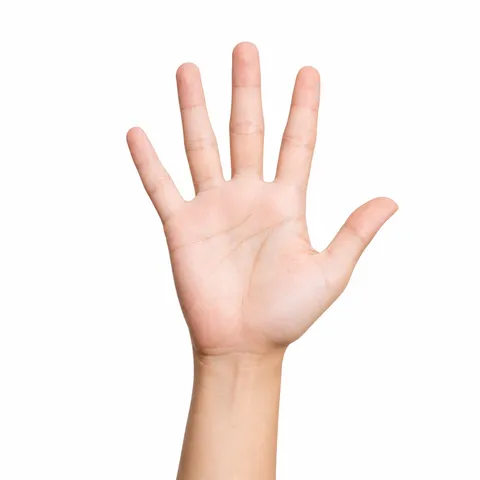
An open palm.
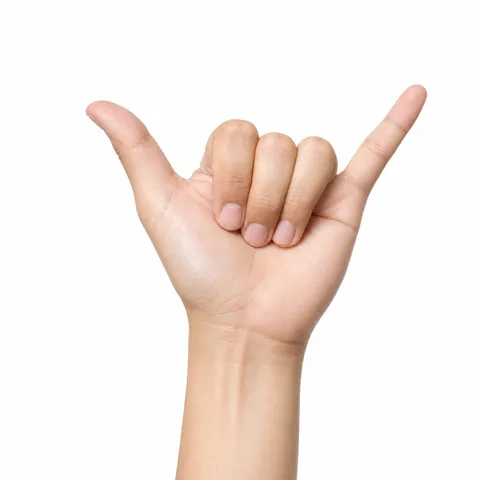
The thumb and little finger.

The tips of the thumb, index and middle fingers pinched together.

The thumb and index finger in an L shape.

The index finger bent into a hook.

The index and middle fingers crossed like 十. A fist works too.
10 is 十 (shí). All the tens are built from it — 二十 (20), 三十 (30) — and 11 to 19 are 十 plus a digit: 十一, 十二.
一 (yī), 二 (èr), 三 (sān), 四 (sì), 五 (wǔ), 六 (liù), 七 (qī), 八 (bā), 九 (jiǔ), 十 (shí). Zero is 零 (líng).
Both mean "two". 二 is for counting and inside numbers (十二, 第二); 两 goes before a measure word (两个, 两本) and usually before 千, 万 and 亿.
100 is 一百 (yì bǎi), 1,000 is 一千 (yì qiān) and 10,000 is 一万 (yí wàn).
On its own and at the end of a number 一 is yī (十一 is shí yī). Before 百 and 千 its tone changes to yì, before 万 and 亿 to yí.
Tomyo
Numbers stick when you use them. Tomyo reviews your words on a schedule so what you learn is still there a month later.