
Writing
开始 (kāishǐ) — how to say "to begin" in Chinese
开始
To begin, beginning
verb · noun
Character composition
开
to open, to begin
始
beginning, to begin
Radicals / Keys
女
Woman
#38 · nǚ · 3 strokes
廾
Arch
#55 · gǒng · 3 strokes
Collocations
开始上课
kāishǐ shàng kè
to start class
开始工作
kāishǐ gōngzuò
to start working
Examples
我们八点开始上课。
We start class at eight.
开始吧
Let's begin.
Mnemonic
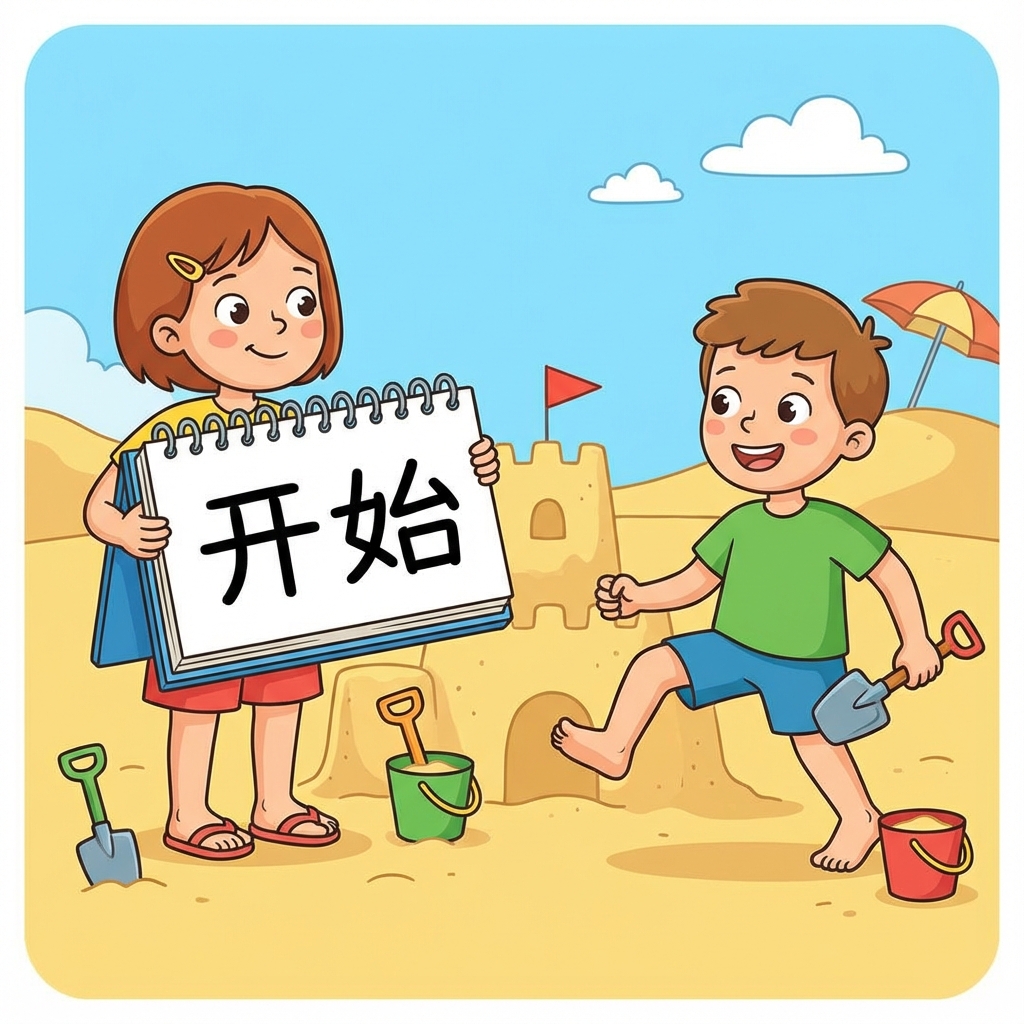
[kāishǐ-] Kyle and Sheila are ready to kick off their adventure. 🚀 They open a dusty old book, and the first page spells 开始: "BEGINNING". Every time they see 开始, they know it's time to begin their magical journey through the enchanted forest.
Frequently asked questions
How to say begin in Chinese?
"to begin" in Chinese is 开始 (kāishǐ).
开始 meaning in English
开始 (kāishǐ) means "To begin, beginning".
How is 开始 pronounced?
It is pronounced kāishǐ (written as kaishi). You can listen to the pronunciation on this page.
How do you write "to begin" in Chinese characters?
It is written 开始: 开 has 4 strokes, 始 has 8 strokes. The Writing section above animates the stroke order of each character and lets you trace it.
What HSK level is 开始?
开始 belongs to the HSK 2 vocabulary list.
Tomyo
Learn Chinese words with spaced repetition
Add 开始 to your vocabulary and remember it with smart reviews, audio and examples.
Grammar with 开始
后来 — later, afterwards
Event 1,后来 (hòulái) Event 2
既然 — since… then…
既然 (jìrán)⋯⋯,就 (jiù)⋯⋯
正好 — just in time, coincidence
Subj. + 正好 (zhènghǎo) + Verb / Adj.
将 — future with “will”
Subj. + 将 (jiāng) + Verb Phrase
一旦 — once… then…
一旦 (yídàn)⋯⋯,就 (jiù)⋯⋯
以后 vs 之后 — after, later
Event + 以后 (yǐhòu) / Event + 之后 (zhīhòu)