
Writing
生气 (shēngqì) — how to say "to get angry" in Chinese
生气
To get angry
verb
Character composition
生
to produce
气
anger
Radicals / Keys
气
Steam
#84 · qì · 4 strokes
生
Life
#100 · shēng · 5 strokes
Synonyms
Collocations
别生气
bié shēngqì
don't be angry
生气地说
shēngqì de shuō
say angrily
Examples
他因为这件事很生气,一整天都没说话。
He got very angry because of this matter and didn't speak all day.
别生气了。
Don't be angry.
Mnemonic
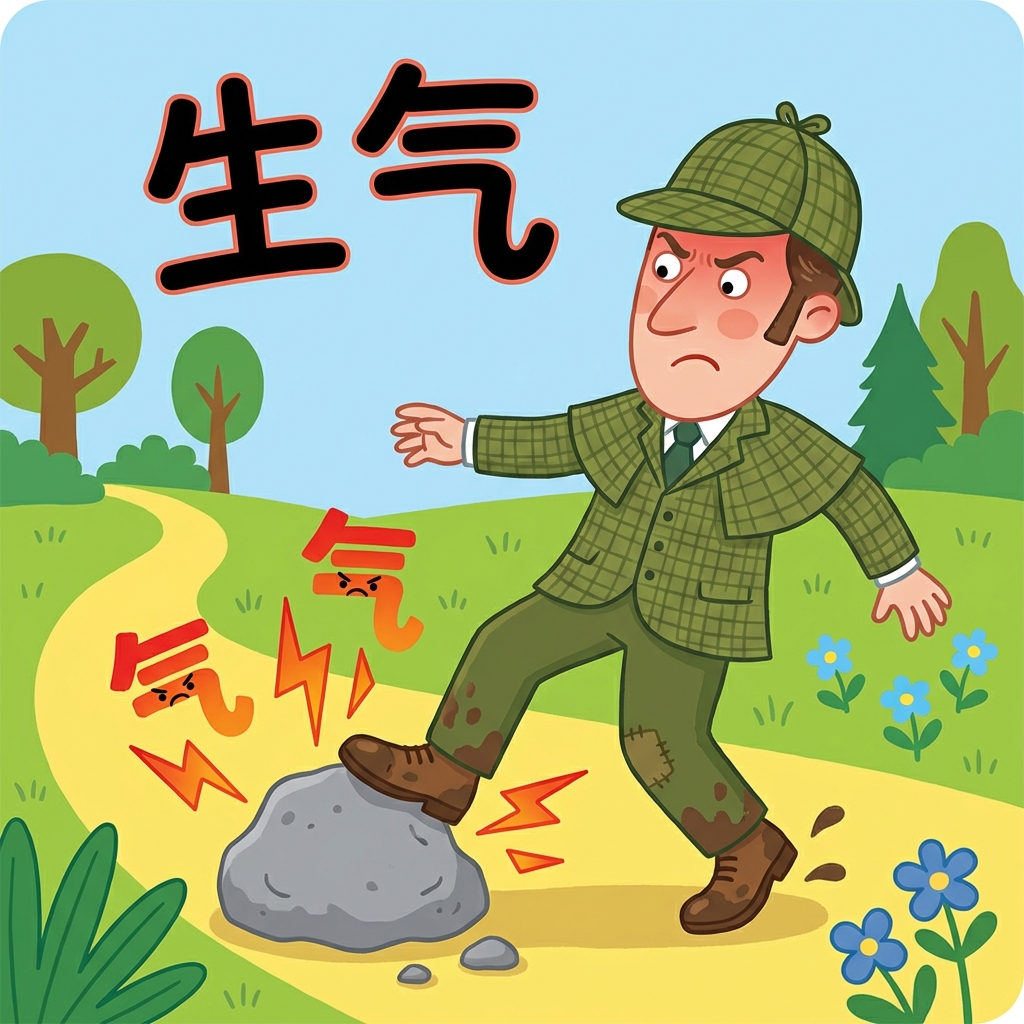
[shēngqì-] Shrek is having a stroll in the swamp when he suddenly steps on a 生 "producing" geyser of anger 气 💥. "生气! Who put this here?" he roars, his face turning green with rage. Even Donkey backs away, not wanting to inflame Shrek's 生气 further.
Frequently asked questions
How do you say "to get angry" in Chinese?
"to get angry" in Chinese is 生气 (shēngqì).
What does 生气 mean in English?
生气 (shēngqì) means "To get angry".
How is 生气 pronounced?
It is pronounced shēngqì (written as shengqi). You can listen to the pronunciation on this page.
How do you write "to get angry" in Chinese characters?
It is written 生气: 生 has 5 strokes, 气 has 4 strokes. The Writing section above animates the stroke order of each character and lets you trace it.
What HSK level is 生气?
生气 belongs to the HSK 3 vocabulary list.
Tomyo
Learn Chinese words with spaced repetition
Add 生气 to your vocabulary and remember it with smart reviews, audio and examples.
Grammar with 生气
尽管 — although… but…
尽管 (jǐnguǎn)⋯⋯,但是 (dànshì)⋯⋯
不但不 — not only not, but the opposite
Subject + 不但不 (búdàn bù) + Verb + 反而 (fǎn'ér) + Verb / Subject + 不但没有 (búdàn méiyǒu) + Verb + 反而 (fǎn'ér) + Verb
反倒 — on the contrary
Subj. + 反倒 (fǎndào) + Verb / Adj. (result opposite to expectation)
动不动 就 — at the slightest thing, just
Subj. + 动不动 (dòngbudòng) 就 (jiù) + Verb
何至于 — would it really go so far as…?
何至于 (hé zhìyú) + such a result / 何至于 (hé zhìyú) + 这样 (zhèyàng) / 如此 (rúcǐ)
犯不着 vs 犯得着 — worth doing or not
Subject + 犯不着 (fànbuzháo) + Verb; Action/Context + 犯得着 (fàndezháo) + 吗 (ma)?