

回
huí
To return
后
After; behind
locative word
Goes after the noun, not before it.
房子后有个花园。
fáng zi hòu yǒu gè huā yuán
There is a garden behind the house.
Mouth
#30 · kǒu · 3 strokes
回家后
huí jiā hòu
after returning home
吃饭后
chī fàn hòu
after eating
他吃饭后去学校
After eating, he went to school
他站在门后。
He is standing behind the door.
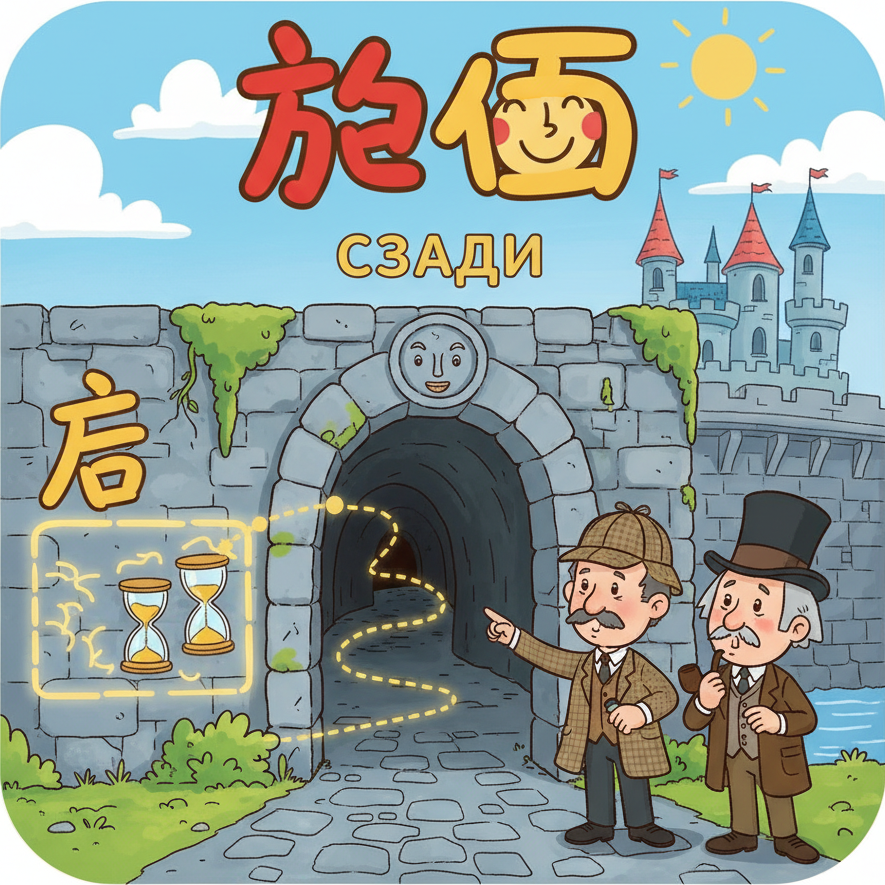
[hòu-] A tortoise named Hou always trails behind everyone 🐢. She walks after the rabbit and sighs, "I come after." That's why 后 means "after, behind."
"after" in Chinese is 后 (hòu).
后 (hòu) means "After; behind".
It is pronounced hòu (written as hou). You can listen to the pronunciation on this page.
It is written 后.
后 is on the HSK 3.0 level 1 word list. It is not part of the six-level HSK 2.0 lists.
Tomyo
Add 后 to your vocabulary and remember it with smart reviews, audio and examples.
以后 — after a time or action
Time / Verb + 以后 (yǐhòu)
以后 vs 之后 — after, later
Event + 以后 (yǐhòu) / Event + 之后 (zhīhòu)
再也不 — never again
Subj. + 再也 (zài yě) + 不 (bù) + Verb Phrase + 了 (le)
或者 — or in statements
⋯⋯或者 (huòzhě)⋯⋯
以后 — in the future
以后 (yǐhòu),⋯⋯
对于 vs 至于 — as for, regarding
对于 (duìyú) + Topic (focus) / 至于 (zhìyú) + Topic (transition)