
Writing
非常 (fēicháng) — how to say "very" in Chinese
非常
Very, extremely
degree adverb
How to use it
Goes before an adjective or a verb of feeling.
我非常忙。
wǒ fēi cháng máng
I am very busy.
Character composition
非
not
常
usually, often
Radicals / Keys
巾
Turban
#50 · jīn · 3 strokes
非
Wrong
#175 · fēi · 8 strokes
Synonyms
很
very
hěn · neutral, general
极
extremely
jí · used after adjectives
十分
very, extremely
shí fēn · formal, written
挺
very, quite
tǐng · colloquial, in speech
不得了
extremely, terribly
bù dé liǎo · colloquial, emotional
极其
extremely, exceedingly
jí qí · formal, written
万分
extremely, exceedingly
wàn fēn · formal, written, intense
要命
extremely; unbearably; to death
yào mìng · colloquial, extreme degree
大大
greatly, very much
dà dà · literary, before verbs
好不
very, quite
hǎo bù · emphatic, exclamatory, literary
特
especially; very; specially
tè · colloquial, northern speech
Collocations
非常忙
fēicháng máng
extremely busy
非常好
fēicháng hǎo
extremely good
Examples
今天非常冷,我们别出去。
Today is very cold, let's not go out.
我非常忙
I am very busy.
Mnemonic
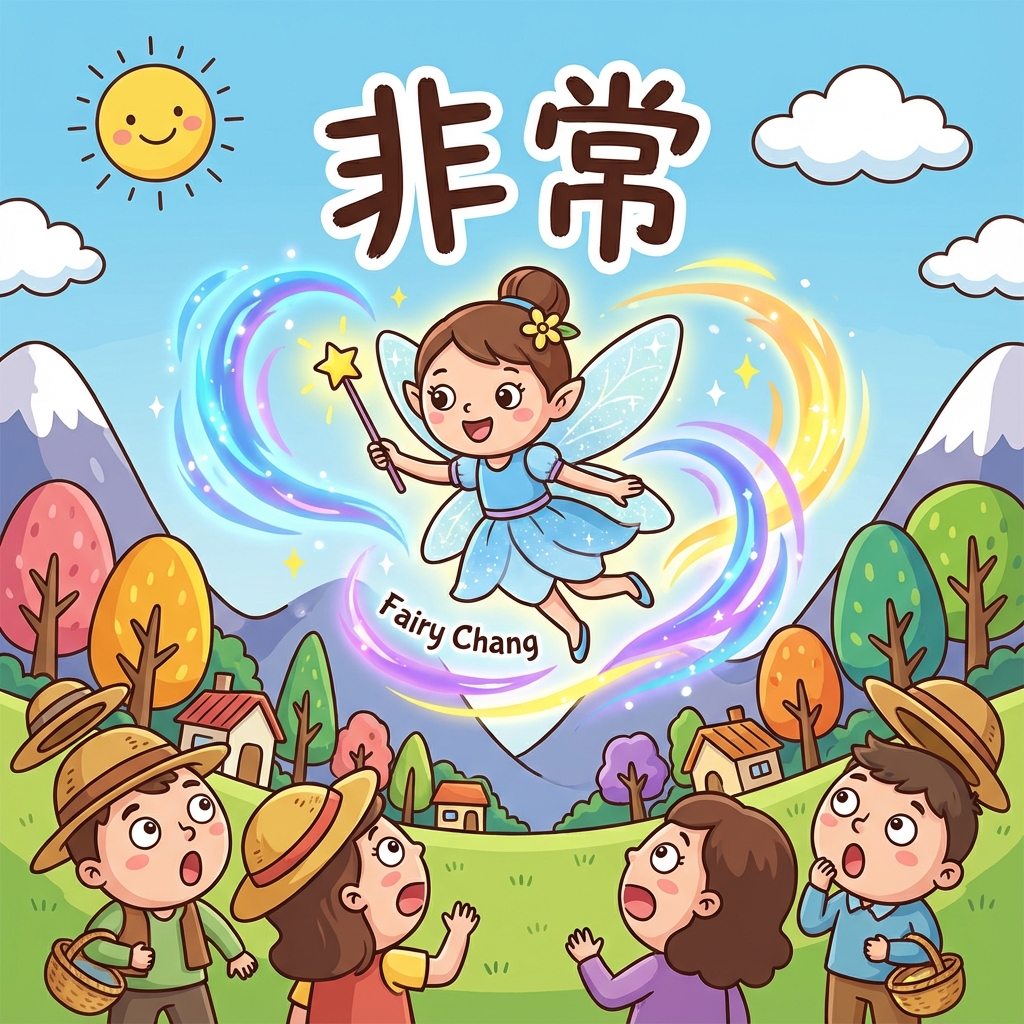
[fēicháng-] Fairy Chang flies over the valley and casts a spell: "非常 extraordinary magic!" 🧚♀️. Above her appears the symbol 非, indicating that this is 非 "not" ordinary magic but 非常 "very, extremely" powerful, leaving every villager in awe.
Frequently asked questions
How do you say "very" in Chinese?
"very" in Chinese is 非常 (fēicháng).
非常 meaning in English
非常 (fēicháng) means "Very, extremely".
Very in Chinese pinyin
It is pronounced fēicháng (written as feichang). You can listen to the pronunciation on this page.
How do you write "very" in Chinese characters?
It is written 非常: 非 has 8 strokes, 常 has 11 strokes. The Writing section above animates the stroke order of each character and lets you trace it.
What HSK level is 非常?
非常 belongs to the HSK 2 vocabulary list.
Tomyo
Learn Chinese words with spaced repetition
Add 非常 to your vocabulary and remember it with smart reviews, audio and examples.