
Writing
不错 (bú cuò) — how to say "not bad" in Chinese
不错
Not bad, pretty good
adjective
Character composition
不
not
错
mistake
Radicals / Keys
一
One
#1 · yī · 1 stroke
金
Gold
#167 · jīn · 8 strokes
Synonyms
Collocations
不错的人
búcuò de rén
a decent person
不错的书
búcuò de shū
a good book
不错的电影
búcuò de diànyǐng
a good movie
Examples
我觉得这家餐厅的菜味道不错。
I think the food at this restaurant tastes not bad.
他的中文说得不错,但还需要练习。
He speaks Chinese not badly, but he still needs practice.
Mnemonic
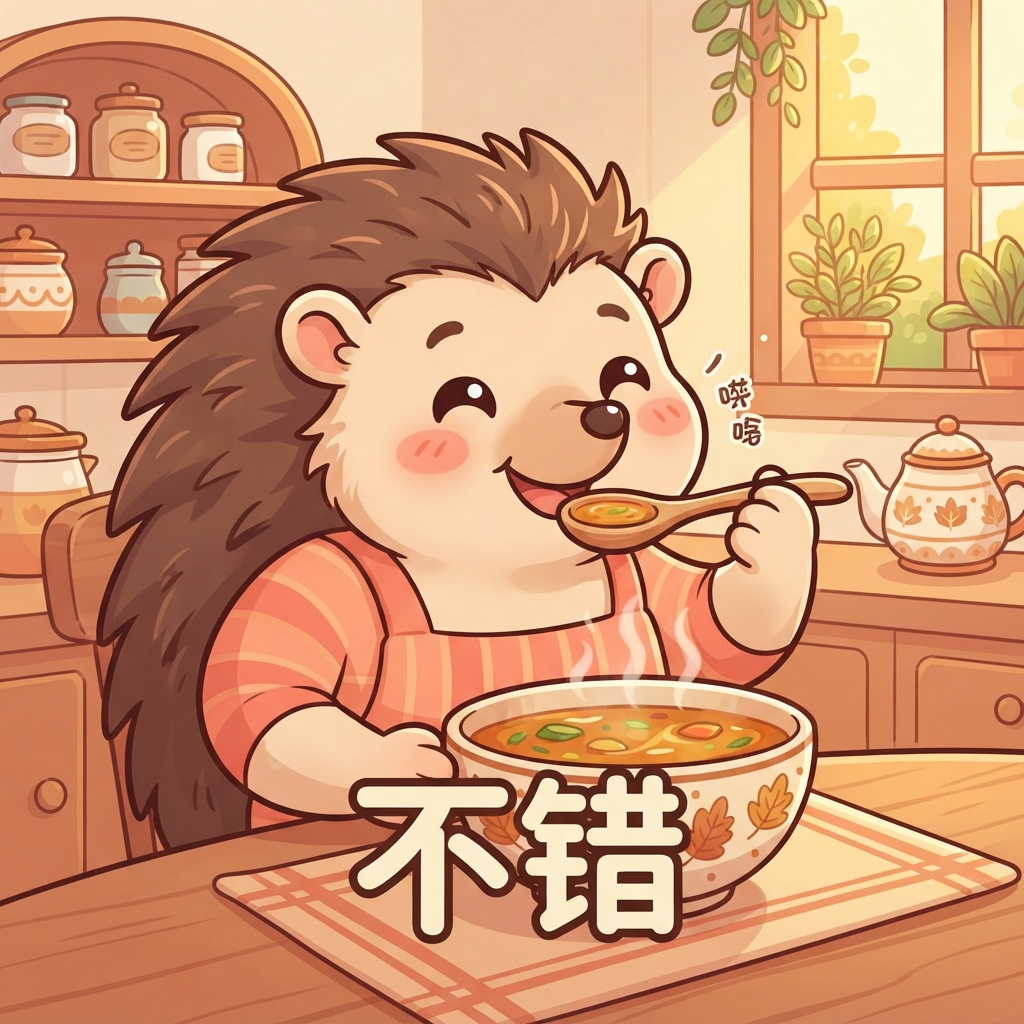
[bú cuò-] sounds like "boo tswor", as if a hedgehog named Boo clucks happily. He sips his soup and smiles: "Mmm, boo-tswor — that's not bad at all, 不错!" 🦔🍲
Try remembering 不错
Three short exercises on meaning and pronunciation. Free, no sign-up needed.
Frequently asked questions
How do you say "not bad" in Chinese?
"not bad" in Chinese is 不错 (bú cuò).
What does 不错 mean in English?
不错 (bú cuò) means "Not bad, pretty good".
How is 不错 pronounced?
It is pronounced bú cuò (written as bu cuo, bucuo). You can listen to the pronunciation on this page.
How do you write "not bad" in Chinese characters?
It is written 不错: 不 has 4 strokes, 错 has 13 strokes. The Writing section above animates the stroke order of each character and lets you trace it.
What HSK 3.0 level is 不错?
不错 is on the HSK 3.0 level 2 word list. It is not part of the six-level HSK 2.0 lists.
Tomyo
Learn Chinese words with spaced repetition
Add 不错 to your vocabulary and remember it with smart reviews, audio and examples.
Grammar with 不错
还 — pretty, fairly
还 (hái) + Adj.
不过 — softer “but”
⋯⋯,不过 (búguò) ⋯⋯
但是 — but, however
但是 (dànshì) / 可是 (kěshì) / 不过 (bùguò) / 然而 (rán'ér)
反过来 — reversal and concession markers
反过来 (fǎnguòlai) + (说 (shuō)) + reverse viewpoint; 话是这么说 (huà shì zhème shuō) + objection; 话 (huà) + (又 (yòu)) + 说回来 (shuō huílai) + counterbalancing point; 退一步说 (tuì yí bù shuō) + concession
概括来说 — summary and conclusion
概括来说 (gàikuò lái shuō) / 总的来说 (zǒng de lái shuō) / 总而言之 (zǒng ér yán zhī) / 归根到底 (guīgēndàodǐ) / 简言之 (jiǎn yán zhī) / 简而言之 (jiǎn ér yán zhī) / 综上所述 (zōng shàng suǒ shù) + Conclusion