

多么
Duōme
How, what
鼻子
Nose
nose
noun suffix
Child
#39 · zǐ · 3 strokes
Nose
#209 · bí · 14 strokes
感冒的时候,鼻子不通气,特别难受。
When you have a cold, your nose is stuffy, it's very uncomfortable.
他的鼻子很高。
He has a high nose.
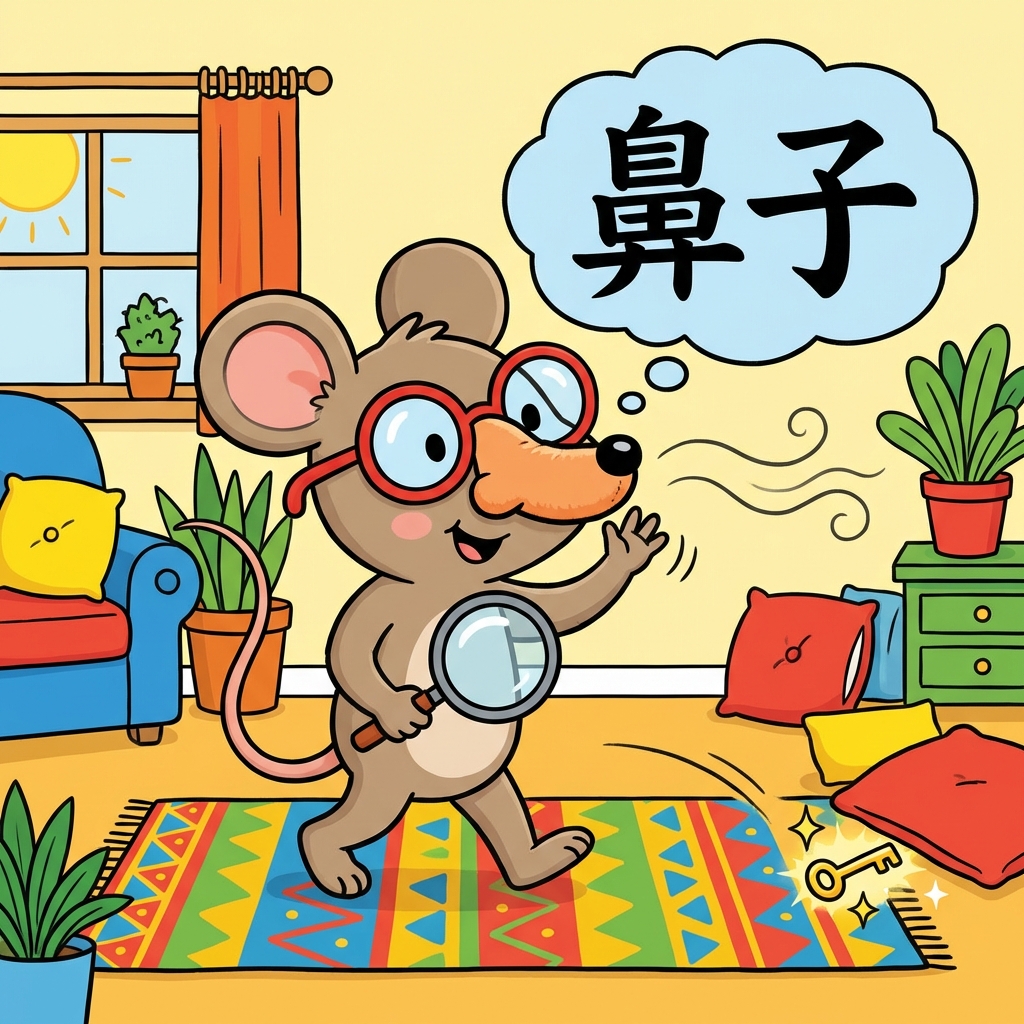
[bízi-] Billy Zebra 🦓 woke up one morning to find his 鼻子, nose, growing longer and longer! Intrigued, he started using it to smell all the delicious scents in the jungle. Billy's new superhero 鼻子 helped him detect the ripest fruits and best paths, leading to daily feasts!
"nose" in Chinese is 鼻子 (bízi).
鼻子 (bízi) means "Nose".
It is pronounced bízi (written as bizi). The page has audio recorded by a native speaker.
It is written 鼻子.
鼻子 belongs to the HSK 3 vocabulary list.
Tomyo
Add 鼻子 to your vocabulary and remember it with smart reviews, audio and examples.