The New HSK 3.0 Standard: Why There's So Much Buzz—and How Not to Get Lost in the Transition
In recent months, we've been hearing the phrase "new HSK 3.0 standard" more and more—and this isn't just another "exam update." We're talking about a broader framework: HSK following the "three stages and nine levels" scheme, which should more accurately describe what a person can actually do in Chinese—reading, writing, listening comprehension, and speaking. Formally, this connects to a national standard that China introduced as the foundation for international measurement of Chinese proficiency.
And yes, there's important practical news: January 31, 2026 marks the worldwide pilot/trial HSK 3.0 exam at select centers, with registration through the official ChineseTest service.
Is HSK 3.0 "New Levels" or "New Meaning"?
In short: both. We're used to the HSK 1–6 ladder, where "level six" sounds like the final boss. The new standard introduces nine levels, grouped into three stages (roughly: basic, intermediate, advanced). This isn't an attempt to complicate life, but rather to make the scale more "human": between "I can explain myself in a café" and "I read articles without a dictionary," there are many intermediate states—and we want to label them differently.
There's another shift that seems more important to me than the numbers: the focus shifts from a set of memorized words to communicative tasks. The official ChineseTest page emphasizes that the new syllabus describes components like tasks, topics, vocabulary, grammar, and characters—that is, "what exactly the learner should be able to do."
Transition Period: Why People Feel Like "The Ground Has Shifted"
The problem isn't that the standard is bad. The problem is the overlap of eras. In the same conversation, three realities collide:
1) "Old HSK" as the current benchmark for many universities and programs.
2) "New standard" as the official 3 stages / 9 levels framework.
3) "Pilot exams" and gradual implementation.
Hence the typical dialogue I hear constantly:
— "I need HSK6 for graduate school. Now they say HSK6 is no longer the maximum. Do I have to start over?"
— "No, not from scratch. But you need to understand what exactly the specific program requires: an old format certificate or participation/equivalent in the new one."
And here emerges the first useful thought: HSK isn't a religion—it's a tool. Tools are always chosen for the task at hand.
What Actually Changes for the Learner: Four Mini-Cases
Case 1. "I'm Learning for Life, Not for a Certificate"Imagine Vika. She works on an international team, exchanges messages with a colleague from Shenzhen, sometimes has calls. What matters to her: understanding voice messages, responding quickly, not getting lost in everyday topics.
Previously, Vika could orient herself toward "reaching HSK3/4" simply because those are familiar labels. In the new logic, it's easier for her to describe her goal differently: "I want to complete the basic stage and confidently maintain a level where I solve work tasks in Chinese." This sounds grounded and, honestly, is more motivating.
A mini-dialogue from her life:
— 你今天方便开个会吗?(Nǐ jīntiān fāngbiàn kāi gè huì ma?)
— 可以,我十分钟后上线。(Kěyǐ, wǒ shí fēnzhōng hòu shàngxiàn.)
This isn't "exam Chinese." This is Chinese that works.
Case 2. "I Need a Certificate—and I'm Afraid of Making a Mistake"Now Andrey: applications, deadlines, nerves. In January 2026, he sees news about the pilot HSK 3.0 and thinks: "Maybe I should take this one? What if they cancel the old one soon?"
Here's where it's important not to panic: the pilot exam is an opportunity to "feel out" the new format, but university and immigration program requirements are usually set in official documents. The pilot has a specific date (January 31, 2026), registration goes through ChineseTest, and in some cases for levels 3–6, you need to register simultaneously for the speaking component.
A scenario that helps avoid mistakes:
Case 3. "I'm a Teacher with a Class—What Should I Tell People?"— "The requirements say: HSK 5 (minimum). Is this about the old one?"
— "If the document doesn't specify the new standard, it's almost always about the familiar 1–6 scale. Check with the admissions office, but don't restructure your preparation blindly."
Teachers have their own pain in this story: students love clarity. "HSK2 → HSK3" is an understandable trajectory. But "stages/levels/bands" sounds like new bureaucracy.
My favorite way to explain this gently is through a reading metaphor. When we read a book, we also have more than one indicator of "I understood/didn't understand." There's reading speed, depth of understanding, vocabulary, ability to retell, ability to argue with the author. The new standard does roughly the same thing with language: it tries to break down "Chinese proficiency" into more precise facets.
A phrase you can tell your class:
"We'll continue following our familiar curriculum, but we'll track progress more broadly: not just words, but also what tasks you can already handle—from 'ordering food' to 'discussing weekly plans.'"Case 4. "I Keep Flashcards and Notes—How Do I Restructure My System?"
And here we return to Tomyo logic. For many people, learning becomes a warehouse: word lists, tables, thousands of flashcards. The new standard (and adult learning in general) nudges toward a different habit: connecting knowledge with context.
Here's an example of what this looks like "in the field." You're learning the word 计划 (jìhuà, "plan"). You could just memorize the translation. Or you could create an "anchor" from a note:
今天的学习计划:复习十个词,听一段播客。(Jīntiān de xuéxí jìhuà: fùxí shí gè cí, tīng yí duàn bōkè.)
Today's study plan: review 10 words and listen to a podcast segment.
Now the word stops being abstract. It becomes part of your reality—like a quote you once wrote down and then suddenly remembered at the right moment.
What to Do Right Now If You're Studying in 2026
The calmest scenario is living in two scales simultaneously. Don't "jump" to the new standard abruptly, but maintain parallel tracking: "my level on the old scale" and "what tasks I can already handle." Tasks will survive any reforms.
If you're planning to take the pilot, keep this simple thought in mind: the pilot is about familiarization, not about urgently "choosing the right religion." Chinese will remain Chinese: you'll still listen, speak, read, and write—the measurement ruler will just become more precise.
Conclusion: The New Standard Is a Reason to Learn More Maturely
The new HSK 3.0 standard doesn't cancel your current trajectory. It adds detail and, honestly, makes the goal more honest: not "complete a level," but learn to do things in the language—asking, explaining, arguing, reading, remembering, living.
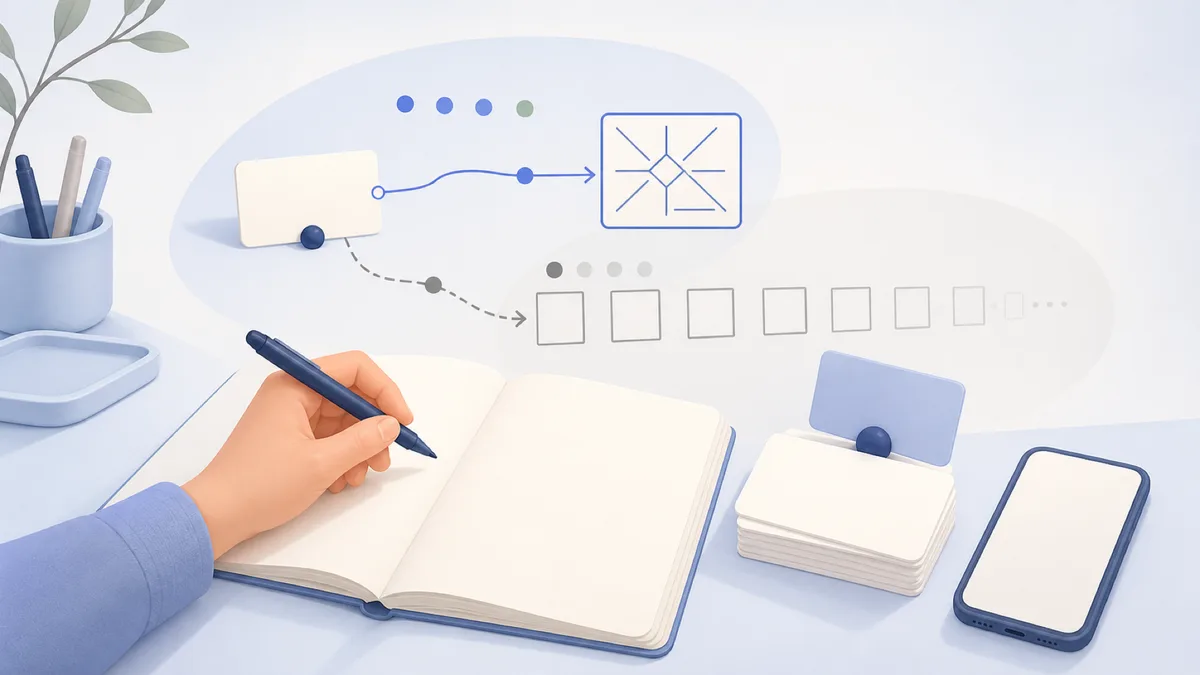
And so that progress doesn't fall apart into pieces, try tracking it like reading: through notes, quotes, context, and living phrases. In Tomyo, this is convenient to gather into one connected picture: flashcards → examples → notes → review. And one day you'll catch yourself realizing that Chinese has become not a subject, but an environment.